
Increasing turbo pressure is a key ambition for enthusiasts seeking more power and responsiveness from their engines. Whether you drive a Honda Civic Type R, a Ford Focus ST, a Subaru WRX, or a Mazdaspeed variant, understanding how to optimise boost control through wastegate adjustments and variable geometry configurations can unlock significant performance gains. The interplay between these components and supporting systems such as intake pipework, exhaust manifolds, fuel quality, and lubrication determines whether your turbocharger operates at peak efficiency or falls short of its potential. This guide explores the technical elements that govern turbo pressure, offering practical insights into how you can fine-tune your setup for reliable and exhilarating performance.
Optimising wastegate settings for enhanced boost control
The wastegate is a fundamental component in any turbocharged engine, tasked with regulating the amount of exhaust gas that reaches the turbine wheel. By allowing excess exhaust to bypass the impeller, the wastegate prevents the turbo from generating more pressure than the engine can safely handle. This mechanism is essential for engine safety, as uncontrolled overboost can lead to detonation, blown gaskets, or even catastrophic engine failure. For those seeking to increase turbo pressure, understanding how to adjust wastegate settings is the first step toward achieving a more aggressive boost curve without compromising reliability.
Internal vs external wastegate: which configuration suits your engine best
When it comes to wastegate design, enthusiasts often face a choice between internal and external configurations. Internal wastegates are integrated into the turbocharger housing and are typically found on factory setups for models such as the Honda Civic Si or the Ford Focus ST. They offer simplicity and compactness, making them suitable for street-driven vehicles where space and ease of installation are priorities. However, internal wastegates can struggle to manage high boost levels, particularly in modified engines pushing beyond factory specifications. As exhaust flow increases, the internal gate may not open quickly or fully enough, leading to boost creep and inconsistent pressure delivery.
External wastegates, by contrast, are mounted separately on the exhaust manifold and provide superior control over exhaust gas flow. They are favoured in custom setups and high-performance applications, including builds for the Subaru WRX STI and Mazdaspeed 6, where precision and responsiveness are paramount. By venting exhaust gas before it reaches the turbine, external wastegates reduce the risk of overboosting and allow for more stable pressure across the rev range. Aftermarket options are widely available, offering various spring rates and port sizes to match specific power goals. For engines targeting substantial increases in turbo pressure, the upgrade to an external wastegate is often a necessary step to maintain control and protect engine components.
Adjusting wastegate actuator preload to fine-tune pressure delivery
Beyond the choice of wastegate type, the actuator preload plays a critical role in determining when and how quickly the wastegate opens. The actuator is a spring-loaded device that responds to pressure signals from the intake or charge pipes. By adjusting the preload, you effectively change the threshold at which the wastegate begins to bypass exhaust gas. Increasing preload raises the boost ceiling, allowing the turbo to build more pressure before the gate opens. Conversely, reducing preload lowers the boost target, which can be useful for engines that are not yet equipped with upgraded internals or fuelling systems.
Many enthusiasts begin by adjusting the actuator rod length, a straightforward modification that can yield noticeable changes in boost behaviour. However, this approach has limitations, particularly if you are aiming for dynamic control across different driving conditions. This is where a boost control solenoid becomes invaluable. Installed between the intake and charge pipes, the solenoid modulates the pressure signal reaching the wastegate actuator, enabling precise electronic control of boost levels. Modern tuning software allows you to map boost targets against throttle position, engine speed, and load, providing a level of refinement that mechanical adjustments alone cannot achieve. For cars like the Honda Civic Type R and the Ford Explorer ST, which benefit from sophisticated factory ECUs, a boost control solenoid paired with a custom tune can transform the turbo response and unlock hidden performance potential.
Variable geometry turbos: maximising efficiency across the rev range
Variable geometry turbochargers represent a significant advancement in boost technology, particularly for diesel engines and some modern petrol applications. Unlike traditional fixed-geometry turbos, these units feature adjustable vanes within the turbine housing that alter the effective aspect ratio of the turbine. By changing the angle and position of these vanes, the turbo can adapt to varying exhaust flow conditions, delivering strong low-end torque while maintaining efficiency at high revs. For performance enthusiasts, understanding how to optimise VGT vane positioning can lead to dramatic improvements in drivability and power delivery.
Understanding vgt vane positioning for improved low-end torque
The primary advantage of variable geometry turbos lies in their ability to reduce turbo lag, a common frustration among drivers of fixed-geometry setups. At low engine speeds, when exhaust gas velocity is relatively modest, the vanes close to narrow the turbine inlet. This increases exhaust gas velocity through the turbine wheel, spooling the turbo more quickly and providing robust torque from lower in the rev range. As engine speed climbs and exhaust flow intensifies, the vanes open to allow greater volume through the turbine, preventing excessive backpressure and maintaining efficient operation.
For models such as the Subaru WRX and certain Mazdaspeed variants, aftermarket VGT solutions or electronic actuator upgrades can enhance the factory geometry system. Tuning the vane control map is crucial, as incorrect positioning can either choke exhaust flow or fail to spool the turbo adequately. A well-calibrated VGT setup delivers a seamless power band, with minimal lag off the line and strong pull through the mid-range, making it ideal for both spirited street driving and track use. The ability to tailor vane behaviour to specific driving scenarios also means you can prioritise low-end punch for daily commuting or high-end power for circuit work, all within the same turbo unit.
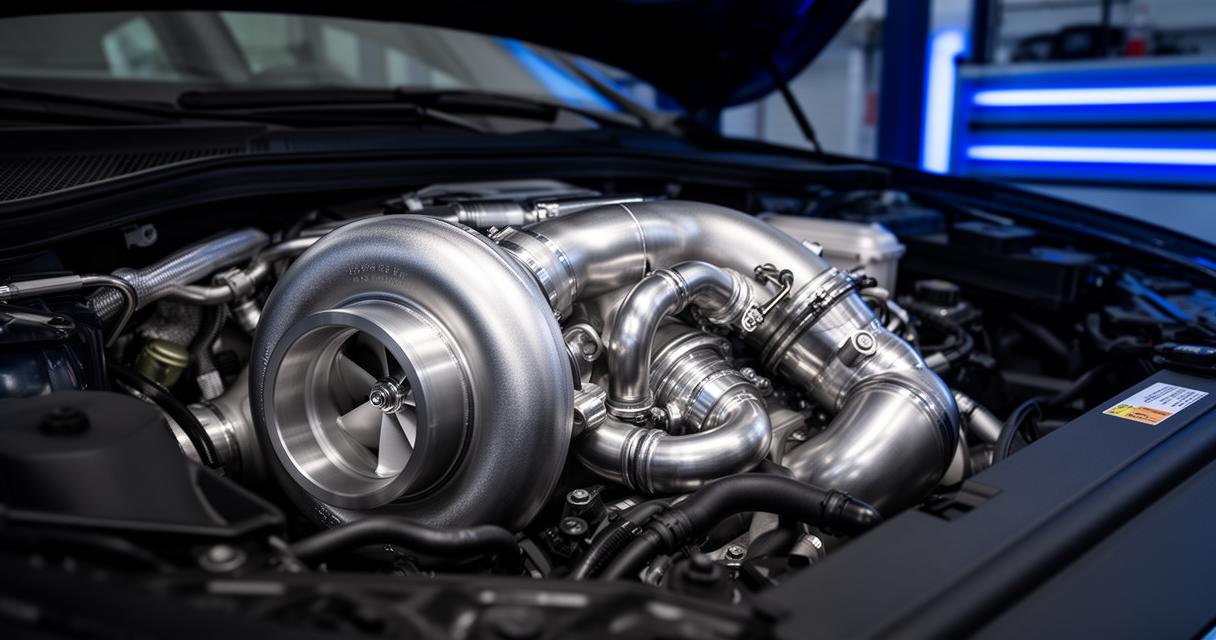
Maintaining Geometry Mechanisms to Prevent Boost Loss and Carbon Build-Up
Despite their performance benefits, variable geometry turbos demand regular maintenance to function correctly. The movable vanes and actuator linkages are susceptible to carbon build-up, particularly in engines that see frequent short trips or those running rich fuel mixtures. Over time, deposits can cause the vanes to stick or move sluggishly, resulting in erratic boost control, reduced power, and increased exhaust gas temperatures. For drivers of the Honda Civic 1.5T or the Ford Focus ST, who may be running higher boost pressures than factory settings, vigilance in maintaining the geometry mechanism is essential.
Routine inspection and cleaning of the vane assembly can prevent costly failures and maintain optimal turbo response. Many specialists recommend using dedicated turbo cleaner products or manually disassembling the unit for thorough cleaning every few thousand miles, depending on usage and fuel quality. Additionally, ensuring that the electronic actuator receives clean, stable signals from the ECU will prevent erratic vane movement. A poorly functioning VGT can also trigger limp mode or fault codes, sidelining your vehicle until repairs are completed. By keeping the geometry components free from obstruction and well-lubricated, you preserve the efficiency and responsiveness that make variable geometry turbos such a compelling choice for performance applications.
Critical factors affecting turbo performance: fuel quality, lubrication, and airflow optimisation
While wastegate tuning and variable geometry adjustments are central to increasing turbo pressure, they are only part of a broader system. Supporting elements such as fuel quality, engine oil viscosity, and airflow pathways exert profound influence over how reliably and effectively your turbocharger can deliver boost. Neglecting these areas can lead to premature component wear, inconsistent performance, and even catastrophic failure, regardless of how well your wastegate or VGT is configured.
Selecting Proper Fuel Octane and Engine Oil Viscosity for Reliable Turbo Operation
Fuel quality is paramount when running elevated boost pressures. Higher turbo pressure increases cylinder pressure and combustion temperatures, demanding a fuel with sufficient octane rating to resist detonation. For petrol engines such as those in the Subaru WRX STI and Honda Civic Type R, using premium unleaded or even higher-octane race fuels can provide the knock resistance needed to safely exploit increased boost. Running lower-octane fuel in a high-boost application invites pre-ignition and detonation, which can destroy pistons, rings, and head gaskets within seconds.
Equally critical is the selection of engine oil. Turbochargers operate at extreme temperatures, with the turbine wheel often glowing red under load. The bearings within the turbo housing rely on a steady supply of clean, high-quality oil to prevent metal-to-metal contact and dissipate heat. Choosing an oil with the correct viscosity for your engine and climate ensures that the turbo receives adequate lubrication at all times. Synthetic oils with robust high-temperature stability are generally preferred for modified setups, as they resist breakdown and maintain protective film strength even under the punishing conditions of sustained high-boost operation. Regular oil changes, using quality filters, and monitoring oil levels are non-negotiable practices for anyone serious about turbo performance and longevity.
Upgrading Intake Pipework and Exhaust Manifolds to Reduce Flow Restrictions
Maximising turbo pressure is not solely about controlling boost; it also requires minimising restrictions in both the intake and exhaust systems. On the intake side, upgrading to larger-diameter pipework, high-flow air filters, and efficient intercoolers reduces pressure drop and ensures that the compressor wheel receives the maximum volume of air. For models like the Ford Explorer ST and Mazdaspeed 3, aftermarket intake systems are readily available and can yield measurable gains in throttle response and peak power. Smooth, mandrel-bent piping with minimal bends and joints preserves laminar airflow, reducing turbulence and heat soak.
On the exhaust side, the manifold and downpipe are critical for maintaining efficient gas flow away from the turbine. Factory manifolds are often cast and feature restrictive internal passages that hinder exhaust velocity and increase backpressure. Replacing these with tubular aftermarket manifolds improves scavenging and allows the turbo to spool more freely. Similarly, a high-flow downpipe with a sports catalyst or decat section reduces restriction immediately downstream of the turbine, preventing exhaust gas from backing up and robbing the turbo of efficiency. When combined with a well-tuned wastegate and optimised geometry settings, these upgrades form a cohesive system that delivers higher, more consistent turbo pressure across the entire rev range.
In addition to hard parts, attention to blow-off valve selection can further refine boost control. When the throttle closes abruptly, the compressor continues to generate pressure momentarily, which can cause damaging surge or compressor stall. A blow-off valve vents this excess pressure to atmosphere or recirculates it back into the intake, protecting the turbo and maintaining compressor efficiency. Aftermarket blow-off valves offer adjustable spring rates and faster response times, ensuring that pressure is managed smoothly during rapid throttle transitions. The characteristic sound produced by venting pressure has made blow-off valves popular among enthusiasts, but their primary function remains safeguarding the turbo and maintaining consistent boost delivery.
For those embarking on custom setups or seeking to push the boundaries of their drivetrain and suspension systems, consulting with specialists who understand the interplay of these components is invaluable. Many suppliers offer assistance in building bespoke configurations tailored to specific models and performance goals, ensuring that every element from the intake to the exhaust works in harmony to maximise turbo pressure safely and reliably. Whether you are fine-tuning a street car or preparing a track weapon, a holistic approach to turbocharger optimisation will yield the most rewarding results.