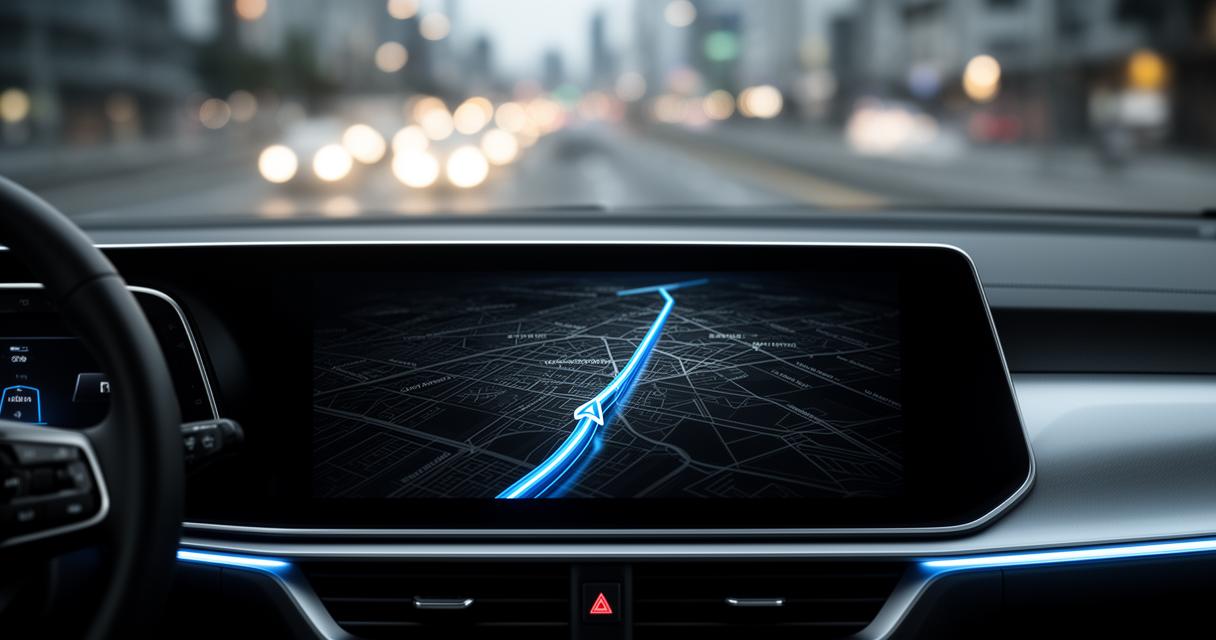
For anyone who relies on regular road travel, whether for daily commutes or weekend explorations, having a navigation tool that genuinely understands your needs can make all the difference. Waze has earned its reputation as one of the most dynamic GPS navigation applications available today, not only guiding you from point A to point B but actively transforming how you experience every journey. By harnessing the power of community-sourced information and advanced route planning capabilities, this application has become indispensable for millions of drivers seeking efficiency, safety, and convenience on the road.
Mastering waze's real-time navigation and community-sourced intelligence
What truly sets Waze apart from traditional GPS navigation systems is its unique approach to gathering and sharing information. Rather than relying solely on static map data, the application continuously collects insights from its vast network of active users, creating a living ecosystem of road intelligence that updates by the second. This collaborative model means that every driver contributes to a collective understanding of current conditions, making the service remarkably responsive to changes as they happen. When you navigate using Waze, you benefit from the combined experiences of countless fellow motorists who report incidents, obstacles, and delays in real time, ensuring your route remains as efficient as possible throughout your journey.
How waze leverages community data to optimise your journey
The strength of Waze lies in its ability to harness the observations of its user community to deliver unparalleled accuracy in traffic prediction and route optimisation. As drivers encounter roadworks, accidents, or unexpected congestion, they can instantly share this information with others, creating a network effect that benefits everyone on the platform. The application processes these reports alongside data about vehicle speeds and movement patterns to calculate the most efficient path forward. This means that if a major incident occurs on your planned route, Waze can suggest alternative roads almost immediately, potentially saving you considerable time and frustration. The system continuously evaluates multiple route options, comparing journey times based on current conditions rather than theoretical speed limits, which allows for remarkably precise arrival time estimates. This community-driven intelligence transforms navigation from a one-way broadcast of directions into a dynamic conversation between drivers, creating a collective problem-solving approach to urban mobility that adapts to circumstances as they evolve.
Understanding Live Traffic Alerts and Hazard Notifications for Safer Driving
Beyond simply finding the quickest route, Waze prioritises driver safety through its comprehensive alert system that warns of potential hazards well before you encounter them. The application notifies users about police presence, speed cameras, and enforcement zones, encouraging adherence to traffic regulations and helping drivers avoid penalties. Additionally, the system alerts you to objects on the road, stopped vehicles, and dangerous weather conditions reported by other users, giving you crucial seconds to prepare for unexpected situations. Speed limit warnings appear prominently on the interface, ensuring you remain aware of current restrictions even on unfamiliar roads. These safety features extend beyond mechanical alerts, as the community aspect means drivers often report specific details about hazards, such as potholes in particular lanes or debris on specific sections of carriageway. The combination of automated detection and human observation creates a safety net that traditional navigation systems simply cannot match, making each journey not only faster but considerably more secure. This proactive approach to hazard awareness has fundamentally changed how drivers interact with their surroundings, transforming passive navigation into active safety management.
Personalising your routes: saving destinations and planning efficient itineraries
One of the most valuable aspects of using Waze regularly is the ability to tailor the application to your specific travel patterns and preferences. The platform offers extensive customisation options that allow you to save frequently visited locations, establish preferred routes, and adjust navigation parameters to match your driving style. By investing a little time in setting up these personalised features, you create a navigation experience that feels intuitive and responds to your unique requirements rather than following generic algorithms. This personalisation extends beyond mere convenience, as it enables the application to learn your habits and anticipate your needs, making each subsequent journey smoother and more efficient than the last.
Step-by-Step Guide to Saving Your Favourite Locations and Custom Routes
Getting the most from Waze begins with properly configuring your favourite destinations and establishing custom routes that reflect your preferences. To save a location, simply search for your desired address or point of interest within the application, then select the option to add it to your favourites or saved places. You can assign meaningful names to these locations, such as home, office, or frequently visited shops, making them instantly accessible for future navigation. The application also allows you to set your home and work addresses, which enables quick navigation to these destinations with minimal input. For those who travel between the same locations regularly, establishing preferred routes proves particularly valuable. When navigating to a saved destination, you can select from multiple route options and designate your preference, which the application will prioritise in future journeys unless traffic conditions strongly suggest an alternative. Additionally, Waze permits you to adjust navigation preferences to avoid toll roads, ferries, or unpaved routes, ensuring the suggested paths align with your vehicle capabilities and cost considerations. During active navigation, you can add one intermediate stop, which proves useful for quick errands or picking up passengers along your journey. However, for more complex itineraries involving multiple destinations, the standard application has limitations, and dedicated route planning tools may prove more effective.
Advanced trip planning techniques to minimise travel time
For those whose work involves visiting multiple locations throughout the day, such as delivery drivers or sales representatives, efficient route planning becomes crucial to productivity. While Waze excels at navigating to individual destinations with real-time traffic awareness, planning complex multi-stop journeys requires additional consideration. Some users have discovered that integrating Waze with specialised route optimisation applications provides the best of both worlds, combining advanced planning capabilities with real-time navigation intelligence. Services like Routerra work alongside Waze to calculate the most efficient sequence for visiting multiple stops, taking into account factors such as distance, typical traffic patterns, and time windows for appointments. Once the optimal route sequence is established, you can navigate each leg using Waze, benefiting from its superior real-time traffic updates and community alerts. This combined approach proves particularly valuable for professionals who need to maximise the number of visits they can complete in a working day whilst minimising fuel consumption and travel time. Even for occasional users planning day trips with several attractions or errands, thinking strategically about stop sequences can dramatically reduce overall journey time compared to visiting locations in arbitrary order. The key lies in balancing theoretical efficiency with practical flexibility, allowing for adjustments when unexpected delays or opportunities arise during your travels.
Seamless Integration: Connecting Waze with Android Auto and CarPlay
Modern vehicles increasingly offer sophisticated infotainment systems that transform the driving environment, and Waze has evolved to work seamlessly with these platforms. Integration with Android Auto and CarPlay brings navigation information directly to your vehicle's built-in display, creating a more cohesive and safer driving experience compared to mounting a separate device. This connection allows you to access Waze's full functionality through your car's larger screen and audio system, whilst maintaining compliance with regulations regarding mobile device use whilst driving. The integration represents a significant advancement in how drivers interact with navigation technology, making sophisticated route guidance feel like a natural extension of the vehicle itself rather than an added accessory.
Setting up waze with your vehicle's infotainment system
Connecting Waze to your vehicle's system typically involves a straightforward process that begins with ensuring your phone and car are compatible with either Android Auto or CarPlay, depending on your device. For Android users, you will need a phone running a recent version of the operating system and a vehicle equipped with Android Auto capability. Begin by downloading the Android Auto application to your phone if it is not already installed, then connect your device to the vehicle using a USB cable or wireless connection if supported. Once connected, the car's display should automatically launch the Android Auto interface, where you can select Waze as your preferred navigation application. For iPhone users, the process mirrors this approach using CarPlay, which is typically built into iOS without requiring a separate application. After the initial connection, you can usually configure settings to launch Waze automatically when you start the vehicle, eliminating the need for manual selection each time. Some users find it helpful to adjust display settings within Waze to optimise visibility on larger screens, and you can customise colour schemes to reduce glare during night driving. The integration also enables voice commands, allowing you to input destinations or report hazards without taking your hands from the wheel, which significantly enhances safety and convenience during journeys.
Maximising audio playback and hands-free features whilst driving
Beyond navigation, Waze integration with Android Auto and CarPlay opens up additional functionality that enhances the overall driving experience. The application works alongside music streaming services, allowing you to control audio playback directly through the navigation interface without switching between applications. This means you can enjoy your favourite playlists or podcasts whilst receiving navigation instructions, with the system automatically reducing music volume when providing directions or alerts. Voice customisation options let you select from various instruction voices, including some with distinctive personalities, making the navigation experience more enjoyable and helping to maintain your attention during longer journeys. Calendar integration represents another valuable feature, as Waze can access your scheduled appointments and suggest optimal departure times based on current traffic conditions, ensuring you arrive punctually without needing to manually calculate travel time. The hands-free capabilities extend to reporting incidents as well, with voice commands enabling you to contribute to the community without compromising your focus on the road. For the best experience, it is advisable to regularly update both the Waze application and your vehicle's infotainment system software, as developers continuously introduce improvements and new features that enhance functionality and reliability. These updates often include refined voice recognition, improved map rendering, and better integration between connected services, ensuring your navigation system remains current with evolving technology standards. By fully embracing these integrated features, you transform routine journeys into more connected, efficient, and enjoyable experiences that demonstrate how modern technology can genuinely improve daily life.