
Choosing a digital photo frame for your home might seem straightforward, but with so many options on the market — from basic slideshow displays to fully connected smart devices — it pays to know what you’re looking for before you buy. Whether you want to breathe new life into your living room or find a thoughtful gift, understanding the key differences between models will help you make a choice you’ll genuinely be pleased with.
In short
- Prioritize screen quality by checking resolution, brightness, and color accuracy to ensure your photos appear sharp and vivid in your living space.
- Evaluate storage options, such as built-in memory, SD cards, or USB drives, to determine the capacity that best suits your needs.
- Select a frame size and design that complements your specific room decor, with some models offering interchangeable surrounds for added flexibility.
- Consider the ease of setup and use to avoid complicated interfaces and ensure the device remains enjoyable to operate.
- Utilize smart, Wi-Fi-connected frames that allow friends and family to send photos remotely, helping to maintain personal connections across long distances.
- Look for cost-effective options, including refurbished models, to get high-quality displays at a more accessible price point.
Key Features to Look for in a Digital Photo Frame
Before settling on any particular model, it’s worth taking a moment to consider what matters most to you in a home photo display. The best frames combine a quality screen with practical functionality, creating something that feels less like a gadget and more like a natural part of the room. You can explore a wide range of options at https://www.agfaphoto-gtc.com/en/16-digital-photo-frames, where connected and standard frames are available at various price points.

Screen Quality and Resolution: What Makes a Display Worth It
The centrepiece of any digital picture frame is, of course, its screen. A high resolution screen ensures your photographs look crisp and vivid rather than pixelated or washed out. Pay attention to brightness levels too, particularly if you plan to place the frame in a well-lit room or near a window, as a screen that struggles against natural light will quickly become frustrating. Colour accuracy is another consideration — a good photo display screen should render skin tones and landscapes faithfully, so your memories look as you remember them.
Storage, Connectivity and Ease of Use
When it comes to photo storage capacity, think about how many images you realistically want to display. Some frames come with generous built-in memory, while others rely on SD cards or USB drives. A refurbished digital frame, such as the Realiview APF700 with its 7-inch screen and 8GB memory, can offer excellent value — available at a reduced price compared to its original retail cost. Ease of setup matters enormously too; nobody wants to spend an afternoon wrestling with complicated menus when they could be enjoying their photos instead.
Matching a Digital Photo Frame to Your Home and Lifestyle

Beyond the technical specifications, a smart photo frame should suit both your interior and your daily habits. The ideal frame blends seamlessly into your home decor while offering enough functionality to keep things fresh and engaging over time.
Size, Design and Where to Place Your Frame
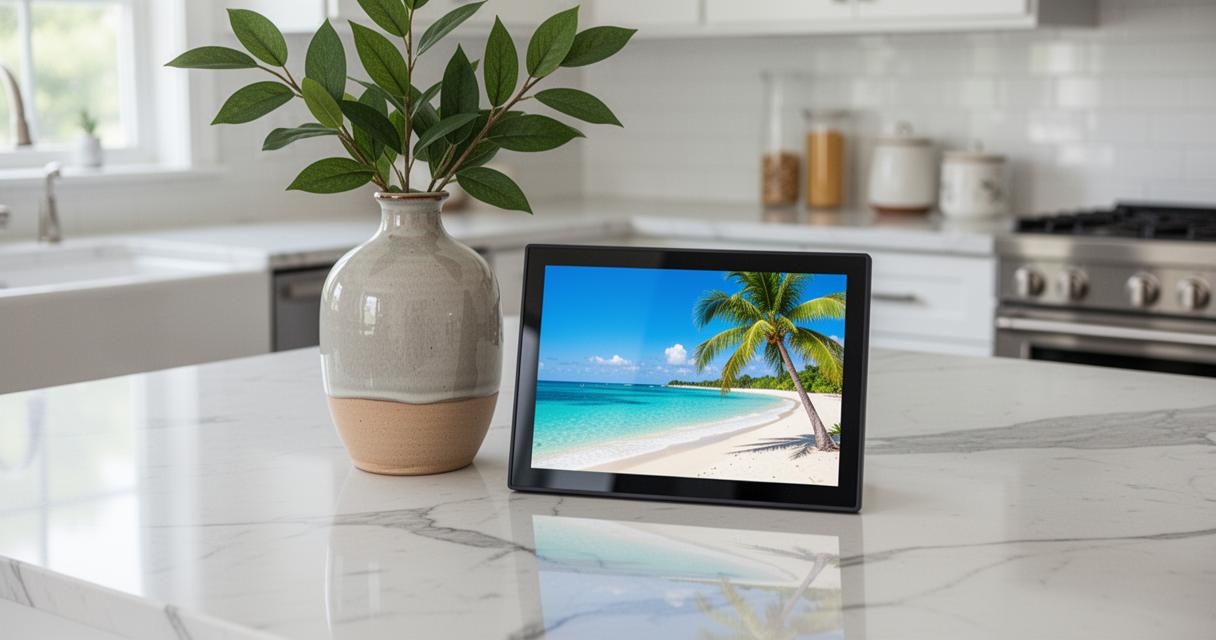
Size is perhaps the most immediately obvious consideration. A smaller frame works beautifully on a bedside table or bookshelf, whilst a larger electronic photo album makes more of a statement on a mantelpiece or sideboard. Design matters just as much as dimensions — look for frames with an interchangeable frame surround if you like the flexibility to update the look as your tastes or décor evolve. This kind of adaptability makes a home decor technology purchase feel far more future-proof.
Smart Features and Sharing Capabilities for Modern Households
For families spread across different cities or countries, a connected photo frame can be genuinely transformative. Models that support the Frameo app allow friends and family to send photos directly to the frame from their smartphones, meaning it updates itself with new memories without any fuss. This turns a simple digital display device into a living, breathing connection between the people you love. Such frames typically include Wi-Fi connectivity and intuitive touch controls, making them accessible even for those who aren’t particularly tech-savvy. As a category of gadget gifts, connected frames consistently prove popular precisely because they combine genuine practicality with an emotional warmth that few other devices can match.